Building links manually can support stronger organic visibility, but U.S. businesses should not assume backlinks are always the next SEO priority. Manual backlink building works best when the destination page is useful, technically sound, and worth citing.
The practical answer: For U.S. businesses, manual backlink building should focus on relevant websites, useful destination pages, legitimate editorial reasons, and personalized outreach. SEO is the primary focus because backlinks support organic authority, while PPC can capture near-term demand and website design determines whether traffic turns into enquiries or sales.
What Makes Manual Backlink Building Safe?
Manual backlink building is human-led research, qualification, outreach, and link acquisition rather than automated bulk submission. Manual does not automatically mean white hat.
Google identifies several manipulative link practices as link spam. A safer process looks for topical relevance, audience fit, a genuine reason to cite the page, natural anchor text, and real editorial review.
Backlink work should sit inside a broader SEO and AI Search strategy.
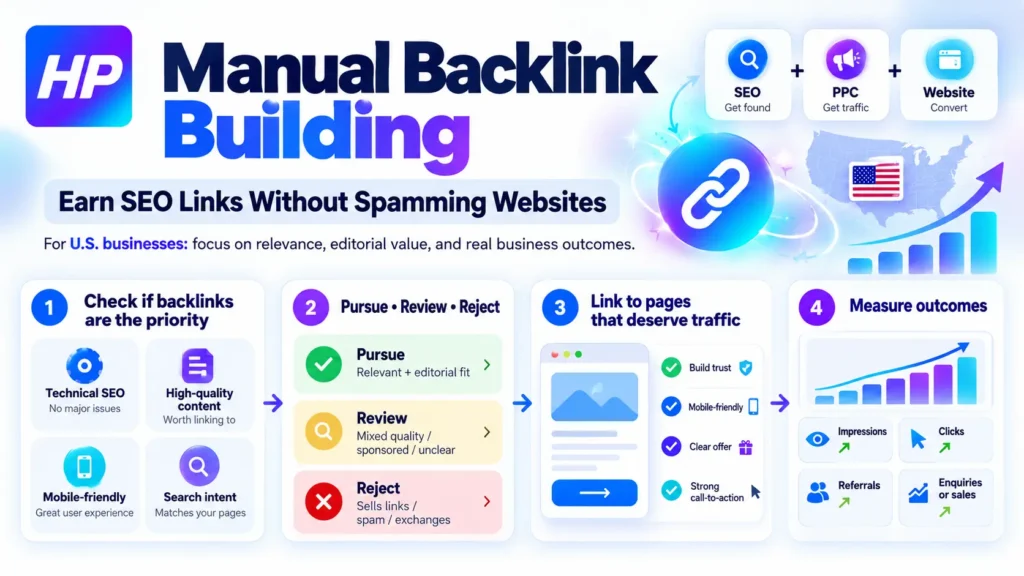
Check Whether Backlinks Are Actually the Next SEO Priority
Before outreach, identify what is limiting the page. A backlink campaign is less useful when technical, content, or conversion problems remain unresolved.
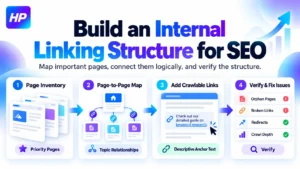
Check whether the page can be crawled and indexed, matches the intended search query, provides enough value to deserve a citation, receives relevant internal links, and works well on mobile devices.
Business type matters too. A local service company targeting one U.S. metro area may value a credible regional association. A national B2B or ecommerce company may need broader topical authority and industry coverage.
In my experience, link building is easier to justify after reviewing the destination page and its search intent.
Use a Pursue, Review, or Reject Test for Every Opportunity
Evaluate backlink prospects for relevance before relying on third-party authority scores.
Pursue when the audience is relevant, the specific page fits your subject, and the link has a legitimate editorial reason.
Review when the site has mixed topics, heavy sponsored content, unclear editorial standards, or questionable outbound-link patterns.
Reject when the site mainly sells links, publishes unrelated content at scale, promises ranking placements, or participates in obvious exchange schemes.
For U.S. businesses, geographic relevance should match the real market, so a regional contractor and nationwide software company should not use identical prospecting criteria.
Build Links to Pages That Deserve Traffic Too
A backlink can send authority or referral traffic, but it cannot repair a weak experience after the click.
A strong destination should explain the offer clearly, work well on mobile, load efficiently, establish trust, and provide an obvious next action. That is where conversion-focused website design supports both SEO and paid acquisition.
Google Ads also emphasizes relevant, useful landing pages. Before attracting more visitors, confirm the page can both earn the link and convert the visitor.
How SEO, Google Ads, and the Website Work Together
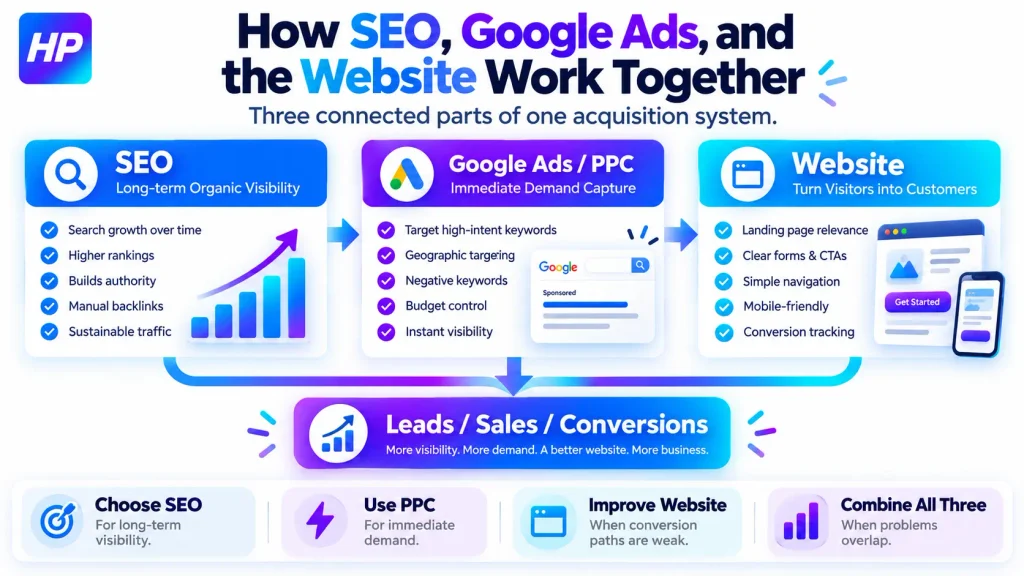
SEO, PPC, and website design solve different parts of the same acquisition problem.
SEO can build long-term organic visibility, with manual backlinks supporting authority when that is a genuine limitation. PPC and paid advertising can capture high-intent demand sooner through keyword targeting, geographic controls, negative keywords, and budget limits.
The website then determines whether traffic becomes a lead or sale. Landing-page relevance, forms, navigation, mobile usability, and conversion tracking affect both organic and paid visits.
Use this priority framework:
- Choose SEO when long-term visibility is the main goal and the site foundation is sound.
- Use PPC when immediate demand exists and paid acquisition can be measured.
- Prioritize website improvements when traffic exists but conversion paths are weak.
- Combine all three when visibility, acquisition, and conversion problems overlap.
Measure Business Outcomes, Not Just Backlink Counts
A higher backlink count is not automatically a better result. Measurement should connect link building to search visibility and business outcomes.
Track target-page impressions and clicks in Search Console, relevant referral traffic, organic landing-page performance, enquiries, purchases, and other important actions. In GA4, important actions can be tracked as key events and used alongside Google Ads conversion measurement.
Ask whether stronger visibility contributed to qualified traffic and meaningful actions, not only how many links were built.
Review Which Digital Marketing Priority Should Come First
If backlinks, technical SEO, paid search, and website performance are all competing for attention, decide which bottleneck matters most first.
Hey Pawan is the professional brand of Pawan Kumar, an independent Digital Marketing Freelancer. You can discuss your SEO or digital marketing project and share your website, challenge, and goals for a focused review of the priorities.
Frequently Asked Questions
What is manual backlink building for a U.S. business?
It is the human-led process of researching websites, qualifying opportunities, conducting outreach, and earning appropriate links. For a U.S. business, strong prospects should match the company’s industry, audience, and geographic reach rather than merely being U.S.-based.
Is manual backlink building always white hat SEO?
No. Manual action alone does not make a link compliant. A person can still create a manipulative placement. The important factors are why the link exists, how it was obtained, whether the placement is editorially useful, and whether it follows search-engine guidance.
How can a U.S. business build backlinks without spamming websites?
Start with websites that genuinely serve the same audience or industry. Research the relevant page, identify a real reason for it to reference your resource, personalize the outreach, and reject sites that mainly sell links, publish unrelated content, or participate in obvious link schemes.
Should I build backlinks before using Google Ads or redesigning my website?
It depends on the bottleneck. Backlinks may help when organic authority is weak. Google Ads can address immediate search demand. Website improvements may deserve priority when traffic already exists but visitors do not enquire or buy. Review the acquisition path before increasing investment in one channel.