Search is not dying.
But the way people search, compare, trust, and choose businesses is changing fast.
For years, SEO was mainly about ranking on Google, getting clicks from blue links, and turning that traffic into leads or sales. That still matters. But it is no longer the full picture.
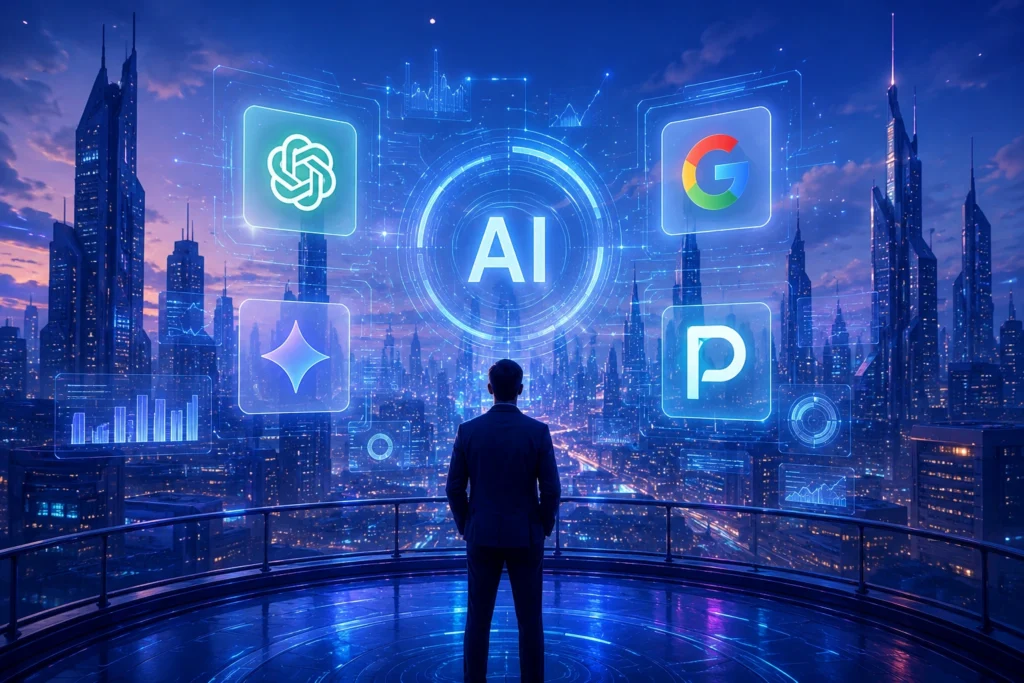
Today, people are not only searching on Google. They are asking ChatGPT, Gemini, Perplexity, Claude, Copilot, and other AI systems for direct answers, recommendations, comparisons, summaries, and buying guidance.
Google itself has moved deeper into AI-powered search through AI Overviews and AI Mode. Google says its generative AI features are still rooted in core Search ranking and quality systems, meaning SEO is still relevant, but the way content is selected, summarized, and displayed is changing.
This means one thing for business owners:
SEO is no longer only about ranking. It is about being understood, trusted, cited, and recommended across search engines and AI systems.
That is the future of SEO.
SEO Is Not Dead. Weak SEO Is Dead.
Every few years, someone says SEO is dead.
It happened when social media became popular.
It happened when paid ads grew.
It happened when voice search arrived.
Now it is happening again because of AI.
But SEO is not dead.
What is dying is shallow SEO.
Old SEO was often built around:
- Publishing generic articles
- Repeating keywords
- Buying weak backlinks
- Writing for algorithms
- Creating pages with no real expertise
- Optimizing for clicks instead of usefulness
That approach is becoming less effective because AI search systems are designed to summarize useful information, compare sources, and answer user questions directly.
Google’s official guidance says SEO best practices still matter for generative AI search because AI features rely on content from Google’s Search index and quality systems.
So the real shift is not:
SEO is dead.
The real shift is:
SEO has become more strategic, more evidence-based, more entity-driven, and more trust-focused.
What Has Changed In Search?
The biggest change is user behavior.
People no longer want only a list of websites.
They want:
- Direct answers
- Summaries
- Comparisons
- Recommendations
- Step-by-step guidance
- Expert explanations
- Trusted sources
- Fast decisions
Google’s AI Overviews provide AI-generated snapshots with links for users who want to explore further.
OpenAI says ChatGPT Search can provide timely answers with links to relevant web sources, without users needing to visit a separate search engine.
This changes the purpose of content.
A blog post is no longer just a ranking asset.
A service page is no longer just a sales page.
A website is no longer just an online brochure.
Your website now needs to become a clear source of truth about your business, your expertise, your services, your proof, your results, and your authority.
Google AI Overviews Are Changing Organic Visibility
Google AI Overviews appear when Google believes an AI-generated summary can help users understand a topic faster.
For business owners, this creates both a risk and an opportunity.
The risk is obvious:
Users may get answers directly on Google and click fewer websites.
The opportunity is more important:
If your content is strong enough, Google may use it as a source in AI-powered results.
Google’s AI features guide explains that site owners should continue focusing on helpful, reliable, people-first content and should make sure Google can crawl and index their pages properly.
That means technical SEO still matters.
But technical SEO alone is not enough.
To compete in AI search, your content must be:
- Clear
- Original
- Helpful
- Expert-led
- Well-structured
- Easy to extract
- Supported by proof
- Connected to strong entities
- Better than generic competitor content
AI search rewards clarity.
If your page is confusing, thin, vague, or copied from common templates, it becomes harder for both search engines and AI systems to understand why you deserve visibility.
Measuring AI search performance is becoming more complicated because visibility and website traffic are not always the same signal. Search Console, GA4 AI Assistant traffic, source classification, and business outcomes can each represent a different stage of the journey. I explored this measurement problem in more detail in my LinkedIn article, “Before You Debug Your AI Tracking, Check Whether the Metrics Measure the Same Event.”
ChatGPT Search Is Creating A New Discovery Channel
ChatGPT is no longer only a chatbot.
OpenAI introduced ChatGPT Search to provide fast, timely answers with links to web sources. It later became available broadly in supported regions.
This matters because users may now ask ChatGPT things like:
- “Best SEO consultant for local businesses”
- “How do I choose a Google Ads freelancer?”
- “What should my business website include?”
- “Compare SEO vs PPC for a service business”
- “Find examples of strong case study pages”
- “Who can help with AI SEO and website design?”
In traditional Google SEO, you optimize pages to rank.
In ChatGPT-style discovery, you need to be understandable enough for AI systems to summarize, cite, or recommend.
That requires more than keywords.
It requires:
- Strong brand identity
- Clear author identity
- Specific expertise
- Public proof
- Case studies
- Consistent entity signals
- Helpful educational content
- Structured page architecture
- Real examples
For HeyPawan.com, this is exactly why the website should not only have service pages. It should also have authority content, case studies, reviews, proof assets, and clear personal branding around Pawan Kumar as an independent digital growth professional.
Gemini Is Making Google Search More Conversational
Google’s AI ecosystem is deeply connected to Search.
With Gemini and AI Mode, Google is moving toward more complex, conversational search journeys. Google has described AI Mode as a way for users to ask more complex questions and receive helpful responses with links to the web.
This changes SEO because users may no longer search in short keywords.
Old search query:
SEO freelancer
New AI-style query:
I run a local construction business and my website gets traffic but very few leads. Should I focus on SEO, Google Ads, landing pages, or website redesign first?
That is a completely different search behavior.
To appear in this new environment, websites need content that answers complete problems, not just keywords.
This is why modern SEO must include:
- Search intent
- Entity SEO
- Semantic SEO
- AEO
- GEO
- UX content
- Conversion strategy
- Technical SEO
- Real business proof
The future belongs to websites that explain topics deeply and clearly.
Perplexity Shows Why Citations Matter
Perplexity has become popular because it gives direct answers with cited sources.
That style of search trains users to expect evidence.
People want to know:
- Where did this answer come from?
- Which source supports it?
- Can I trust this recommendation?
- Is this expert real?
- Is this business credible?
This is important for business websites.
If your website does not show proof, AI systems and users may both struggle to trust it.
Proof can include:
- Case studies
- Screenshots
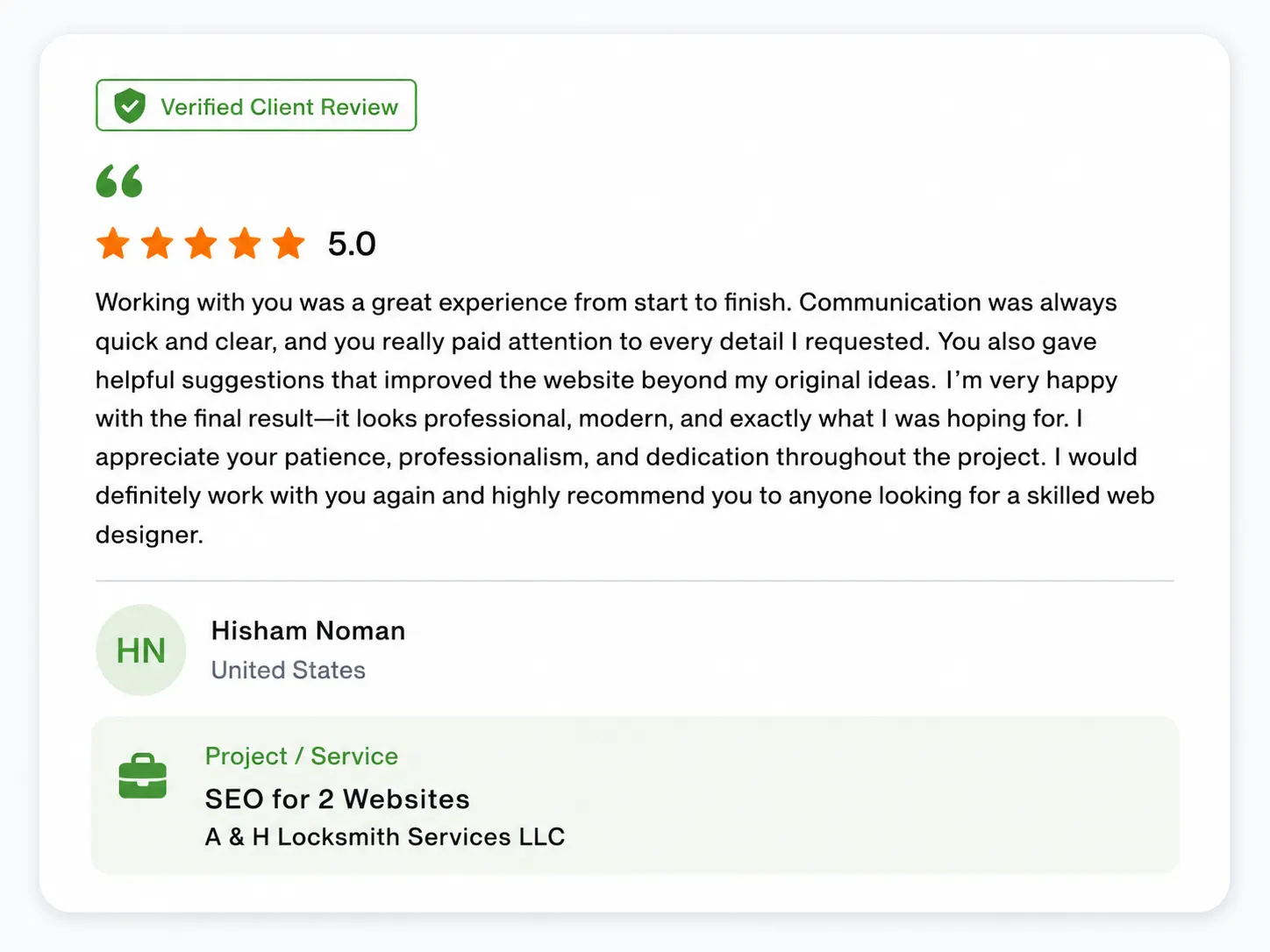
- Client reviews
- Video testimonials
- Recommendation letters
- Portfolio examples
- Before/after data
- Real reports
- Public profiles
- Structured author information
That is why a case study page is not just a portfolio page anymore.
It is an EEAT asset.
It helps humans trust you, and it helps AI systems understand what you have actually done.
The New SEO Framework: From Keywords To Entities
Traditional SEO focused heavily on keywords.
Modern SEO still uses keywords, but keywords are no longer enough.
Search engines and AI systems need to understand entities.
An entity can be:
- A person
- A brand
- A business
- A service
- A location
- A tool
- A topic
- A platform
- A client
- A case study
- A review source
For Hey Pawan, the important entities include:
- Pawan Kumar
- Hey Pawan
- Independent digital growth freelancer
- SEO
- Google Ads
- Website design
- AI search optimization
- Upwork
- Case studies
- Client reviews
- MarketPros.AI recommendation
- WordPress
- Shopify
- Local businesses
- Ecommerce businesses
Google and AI systems need to understand how these entities connect.
Example:
Pawan Kumar is the person behind Hey Pawan. Hey Pawan is a personal brand focused on digital growth. Pawan has experience in SEO, paid ads, website design, AI search optimization, and conversion-focused digital systems. His work is supported by case studies, reviews, Upwork credibility, and client proof.
That type of clarity helps both SEO and AI search.
AEO And GEO Are Not Replacements For SEO
Many marketers now talk about AEO and GEO.
AEO means Answer Engine Optimization.
GEO means Generative Engine Optimization.
These terms are useful, but they should not be treated as completely separate from SEO.
Google’s own guidance says that from Google Search’s perspective, optimizing for generative AI search is still optimizing for the search experience, and therefore still SEO.
That means you should not abandon SEO.
Instead, you should expand it.
Modern SEO now includes:
| Area | Purpose |
|---|---|
| SEO | Improve visibility in search engines |
| AEO | Help answer engines extract clear answers |
| GEO | Help generative AI understand and cite your brand |
| Entity SEO | Clarify people, brands, services, and relationships |
| Semantic SEO | Build topic depth and meaning |
| Technical SEO | Make the site crawlable, fast, and indexable |
| SXO | Improve search experience and conversion |
| EEAT | Build trust, credibility, and authority |
The future is not SEO vs AI.
The future is SEO for an AI-powered search world.
What Businesses Should Do Now
Businesses should stop treating SEO as a checklist.
The old checklist looked like this:
- Add keywords
- Write meta title
- Add H1
- Publish blogs
- Build backlinks
- Wait for rankings
That is no longer enough.
A modern SEO strategy should include:
1. Build A Strong Brand Entity
Your website should clearly explain:
- Who you are
- What you do
- Who you help
- Why you are credible
- What proof exists
- Where else you are present online
For personal brands, the person behind the brand must be visible.
That means real bio, real experience, real profile links, real proof, and consistent naming.
2. Create Helpful Content With Real Expertise
AI search does not need another generic article.
It needs content that adds insight.
Strong content should include:
- Original explanations
- Clear examples
- Practical frameworks
- Screenshots where useful
- Data where available
- Expert interpretation
- Strong structure
- Direct answers
3. Publish Case Studies
Case studies are one of the strongest EEAT assets.
They show:
- The problem
- The process
- The strategy
- The execution
- The result
- The proof
For service businesses and freelancers, case studies can be more persuasive than generic service pages.
4. Improve Technical SEO
AI search still depends on discoverable content.
Your site should be:
- Crawlable
- Fast
- Mobile-friendly
- Structured properly
- Internally linked
- Secure
- Schema-supported
- Free from indexation problems
Google’s AI search guidance still emphasizes traditional SEO foundations such as crawlability, indexability, and helpful content.
5. Use Structured Data
Schema helps search engines understand your content.
Useful schema types include:
- Person
- Organization
- WebSite
- WebPage
- Article
- FAQPage
- Review
- VideoObject
- BreadcrumbList
- Service
- ProfilePage
Schema does not guarantee rankings, but it improves clarity.
And in AI search, clarity matters.
6. Write For Complete Questions
People are asking longer questions.
Your content should answer:
- What is this?
- Why does it matter?
- How does it work?
- What should I do first?
- What mistakes should I avoid?
- How do I compare options?
- Who is this best for?
- What proof supports this?
This helps both humans and AI systems.
The New Role Of A Website
In the AI search era, your website has three jobs.
Job 1: Be Findable
Search engines and AI systems must be able to discover and understand your content.
Job 2: Be Trustworthy
Visitors must believe you are real, experienced, and capable.
Job 3: Be Useful Enough To Be Referenced
Your content should be strong enough that someone, including an AI system, would want to use it as a source.
That is a higher standard than traditional SEO content.
And it is exactly where most businesses fail.
Why Generic Content Will Lose
AI tools can generate average content instantly.
That means average content has almost no competitive advantage.
A generic article about SEO, PPC, or websites will not stand out.
To win, content must include:
- Experience
- Original thinking
- Strong structure
- Real examples
- Business context
- Expert judgment
- Proof
- Clear authorship
This is where independent experts and strong personal brands have an advantage.
A real expert can say things AI cannot invent honestly:
- What they have seen in projects
- What clients usually misunderstand
- Which strategies fail in practice
- What works in specific industries
- What trade-offs matter
- What should be prioritized first
That is the type of content AI search is more likely to value.
How AI Search Changes Local SEO
Local SEO will also change.
Business owners used to focus mainly on:
- Google Business Profile
- Local citations
- Reviews
- Service pages
- Local backlinks
- Map rankings
Those still matter.
But AI search adds new layers.
Now AI systems may compare:
- Reputation
- Website quality
- Reviews
- Service clarity
- Local relevance
- Case studies
- Trust signals
- Content helpfulness
- Brand consistency
A local business that only has a basic website and a Google Business Profile may struggle to compete against businesses with stronger digital entities.
Local SEO now needs:
- Location relevance
- Service clarity
- Review strategy
- Local proof
- Helpful local content
- Schema
- Strong website UX
- Conversion-focused landing pages
- AI-readable business information
How AI Search Changes Ecommerce SEO
Ecommerce SEO is also shifting.
Product pages need more than product names and descriptions.
They need:
- Clear specifications
- Comparison content
- FAQs
- Review signals
- Use cases
- Buying guides
- Schema
- High-quality images
- Trust information
- Shipping and return clarity
- Helpful category content
AI systems may recommend products based on usefulness, clarity, reviews, authority, and availability.
This means ecommerce SEO must connect technical SEO, product content, UX, conversion optimization, and structured data.
How AI Search Changes Service Business SEO
Service businesses need to prove trust faster.
A service page should answer:
- What problem do you solve?
- Who do you help?
- What does the process look like?
- What proof do you have?
- What makes you different?
- What should a customer expect?
- What mistakes should they avoid?
- How can they contact you?
For service businesses, the biggest opportunity is to build content that combines search visibility with buyer confidence.
This is where websites often fail.
They rank but do not convert.
Or they look good but do not rank.
The future requires both.
What This Means For HeyPawan.com
HeyPawan.com is being built for this new search reality.
The goal is not only to create a good-looking freelancer website.
The goal is to build a personal brand that search engines, AI systems, and business owners can understand clearly.
That means the website should include:
- Clear identity around Pawan Kumar
- Strong independent freelancer positioning
- Case studies
- Portfolio proof
- Reviews
- Recommendation letters
- Service pages
- Educational blog content
- Structured data
- Internal linking
- AI-search-ready content
- Conversion-focused UX
This is important because AI search does not only look for websites.
It looks for trustworthy sources.
A strong personal brand website can become that source.
The Future SEO Checklist
Here is the practical checklist businesses should follow.
Content
- Write for real questions
- Add original insights
- Avoid generic AI-style content
- Use examples
- Build topical depth
- Include FAQs
- Update old content
Entity SEO
- Build clear brand identity
- Add author information
- Use consistent naming
- Link to trusted profiles
- Create About and Case Study pages
- Use Person and Organization schema where appropriate
Technical SEO
- Improve crawlability
- Fix indexing issues
- Improve Core Web Vitals
- Add structured data
- Use clean internal links
- Optimize mobile experience
AEO/GEO
- Use clear definitions
- Answer questions directly
- Structure content logically
- Build citation-worthy pages
- Publish original frameworks
- Add proof and examples
Conversion
- Improve page clarity
- Add trust signals
- Show proof early
- Use strong CTAs
- Reduce friction
- Make contact easy
Final Thoughts
The future of SEO is not about choosing between Google and AI.
It is about preparing your business for every place where customers search, ask, compare, and decide.
Google AI Overviews, ChatGPT Search, Gemini, and Perplexity are not just new tools.
They are changing the way information is discovered.
Businesses that keep publishing generic content will become invisible.
Businesses that build clear entities, publish useful content, prove their expertise, and create strong digital experiences will have a major advantage.
The next era of SEO belongs to brands that are easy to understand, easy to trust, and useful enough to be recommended.
That is the direction HeyPawan.com is built around.
And that is the direction every serious business should start preparing for now.